Showing posts sorted by relevance for query una identidad sin fronteras. Sort by date Show all posts

Sunday, June 24, 2007

Una Identidad Sin Fronteras: San Juan Bautista

[bumped up for the Feast Day - Man Eegee]

This weekend is the Pueblo Viejo's annual fiesta to welcome the monsoon season. It's a synergistic legacy that comes from the early days of the region's history. In honor of San Juan Bautista, la gente will gather near downtown and celebrate the cultura that thrives in Baja Arizona.
Dates: Saturday, June 23, and Sunday, June 24, 2007
Time:
4:00 p.m. – 9:00 p.m. (both dates)
Place:
West Congress St. at the Santa Cruz River (south side, west bank)

The traditional procession and blessing will take place on Sunday from 4:30 to 5:30 p.m. People interested in walking in the procession are asked to meet at the Pima College Community Campus, 401 N. Bonita Ave., north of Congress St. The procession will follow along the Santa Cruz River to the fiesta stage where Bishop Gerald F. Kicanas will perform the blessing.

The Día de San Juan Fiesta features Escaramuza and Charros Flor de Primavera performing on horseback. Live music and dance groups include Navegantes, Mariachi Brillante Juvenil, Ballet Folklórico-Tanatzin, and Danza del Venado.

Más información at the City of Tucson website

Drawing from a post I wrote last year, here's some history of this particular feast day.

I'm always fascinated by the way traditions evolve from a single point. In the case of El Día de San Juan on Saturday, the night before is celebrated across Spain with bonfires and rituals of cleansing and renewal; messages preached by Saint John at the waters of the River Jordan. The fires are kindled across cultures and borders to the shores of Ireland where the bonfires trace their roots to Celtic influence.

Perhaps it's the hostile climate that I'm reacting to in 2007, but attending and supporting events like this seem all the more important. Any opportunity to celebrate one's cultura should be taken advantage of; even if we have to create our own traditions based on the history of our roots.

In this particular case, I think of my dad who, like clockwork, goes to my hometown cemetery to de-weed and water the graves of our various ancestors every single Wednesday and Saturday. It is his way of communing with our past, as well as re-focusing his center so that he can be more present to the now and future. It comes from a deep place of respeto y orgullo - hopefully something that I will be able to continue when it's my turn to take up his shovel and mangera.

Water is something sacred to people living in the southwest. I can hear padre's voice echoing in my own throat on a regular basis that, "Man, we really need rain. The animals and desert are thirsty." I guess it's something we have our pulse on when a lot of our free time is spent outdoors - the place where we feel most at peace.

That lifeforce offered by the tierra y cielo is something that is worthy of celebration. If you're in the Tucson area this weekend, join the fiesta along the (ironically) dry banks of the Santa Cruz and feel yourself be woven into the history that surrounds us.

Doing something like that is always worth it.

Part of the Una Identidad Sin Fronteras series

Thursday, July 02, 2009

Happy 4th Blogiversary to Latino Político

July 1st came and went and it wasn't until a few minutes ago that I realized, "OH crap! The site's anniversary!"

So I'm gonna take a cue from the GOP leadership of Arizona's State Senate and pretend that it's not really the 2nd of July if I ignore all the clocks and calendars.

Four years. Wow. I think about the ways blogging has changed and evolved in that time span and am excited for what is possible. I haven't posted nearly as frequently here as I did in the past, but my blogging/activism hasn't slowed down at all. In fact, it's probably increased. Twitter has everything to do with it. Facebook, too.

This site was always about getting more eyes on a worldview that connected with the reality I experience as someone with morenito skin con una identidad sin fronteras. Immigration has obviously been a big part of the radicalizing I've undergone the past several years. With anti-migrant hate remaining out there in strong potency, and racist blowhards aplenty who conflate "latino" and "illegal" with descriptors like diseased/criminal/drugged-out/drug-pushing/etc etc etc, keeping on that beat remains very personal.

The nature of my blogging and activism has changed, but the spirit that sparked my entrance to the web pueblo remains the same:
I started this site to get my voice down on "paper". I don't really care if I get five or 500 hits in a day. I'm doing this because I care about my country. I yearn for the days when we can again proudly live up to this inscription that can be found on the Statue of Liberty:
"Give me your tired, your poor,
Your huddled masses yearning to breathe free,
The wretched refuse of your teeming shore.
Send these, the homeless, tempest-tossed to me.
I lift my lamp beside the golden door."
July 1, 2005
In the near future, this place will have a new voice added to the mezcla. She's Xicana, una feminista, una amiga mía and more importantly, completely unknown to all the blogging crowds and circles I've known over the past several years. Knowing her in real life is never boring so this should be quite the paranda. ¡Cuidado! haters. Lou will whup your ass.

Thursday, May 21, 2009

It's Not Easy Being Green

er...Brown.


I've been blogging since January 1999. I was starting my second semester as a freshman in college and picked up a part-time job to help pay for life expenses. Between class, work, and the general pangs of Growing Up™, the writing became an important outlet so my head wouldn't explode.

A curious thing occurred, though, when I began to explore and assert my inner-Xicano - Una Identidad Sin Fronteras. Like scales falling from my eyes, I realized how much centrifugal force was applied by assimilation to eradicate any instance of dissonance with Normal (read: white).

From language to learning styles to the way words are spoken to the clothes that are worn to interpersonal relationships both familial and professional, the subtle baseline note that came through like a tuning fork that my ear was finally trained to detect was: "You're doing it wrong"

It is something that all people of color experience at some point in their lives. If they haven't yet, they will.

Like any mezcla of humanity, there's the eternal push-and-pull of influence. Por ejemplo, I guarantee that for every Republican that supports full rights for gays and lesbians, there is a close friend, sibling, or someone that's positively affected their life who identify as homosexual. Empathy.

It's a step forward, but the situation is not the same on either side of the flag that's tied in the middle of the tug-of-war rope. The historically dominant side seeks to eradicate the perceived weak by two methods: denouncement and/or disappearing.

Perceived because the weakness is like a mirage in the Sonoran desert.

Over the past few years, my experience of being a citizen of the United States with Mexican ancestry has been enlightening, to say the least. Anti-migrant hysteria from conservatives and nativists who've declared war on my cultura and identity alongside demands for mass deportations and family destruction have been a source of radicalization that's ignited the habanero in my bloodstream.

The haters have a smart strategy, though.

By making immigration a "Latino issue", they've succeeded for years in ghettoizing (denouncement) and marginalizing (disappearing) voices like mine and others who can actually speak to how failed immigration policies affect those whom are targeted by enforcement-only campaigns. Institutional and often outright racism has guaranteed that the vast majority of faces of those raided at their work sites or homes, detained and deported, are brown, even though the U.S. has undocumented workers from every part of the world with varying degrees of melanin.

The irony is that pointing this out somehow makes me the racist. Still don't know how that all works out, but I digress...

The Lou Dobbs and Pat "Operation Wetback" Buchanans of the world thrive because of their ability to hold back coalitions. They represent a power structure that would crumble into dust and drift away like expelled flatulence if enough human beings chose to "Build Bridges and Break Down Walls" as our tag line states at The Sanctuary instead of destroy.

Which brings me to the point of this series - Luis Ramirez.

to be continued...

Thursday, August 27, 2009

Una Identidad Sin Fronteras: Piedras

This site has been quiet for the past few months, but not without reason. Something snapped in me around the inauguration. My life felt stagnant and I was ready for a major change beyond the Change that was bandied about during the Presidential campaign.

I made the decision to put my social life on hold and save money like there was no tomorrow in order to invest in buying a roof over my head. Well, that day came on Friday, August 14th, 2009 at approximately 2pm. I have joined the ranks of home ownership.

What's been amazing is the support from my family and friends, most of whom live over 100 miles away. Each weekend I've been blessed to have many of them here to help me prep the new digs and assist with the movement of all the stuff I've accumulated over the years.

The past few weeks have been a time of purging and cleansing, painting and upgrading. My new casita is a 2-bedroom, 1-bath home built in 1952 and has front row views of sunsets framed by the Tucson Mountains to the west and the city lights to the west at night. I am a stone's throw away from one of the longest continually inhabited area in North America at the base of Sentinel Peak.

Even though I've only been here a couple of weeks, I feel at peace.

This past weekend my nana was here to help with the work of getting into a new-to-me house. Soon to be 79 years old, she is my only remaining grandparent and is so full of love that my heart can't help but to swell when she shares a bit of herself with me. Right before leaving on Sunday, she pulled out a vial of holy water, led us in prayer and blessed my casita. A moment I will never forget.

One of the features of the house is a series of rounded river rocks that adorn the sides of the house and several areas of the expansive, desert-landscaped yard. She chose one and took it with her back to my hometown to put in her yard so she can link my piece of tierra with that of my ancestors. Speaking to her on the phone yesterday, she asked that I bring several more with me when I go home in a couple of weeks so they can be placed at the graves of mis abuelitos.

As she choked up during the request for more piedras, she said, "You are a part of them, and they are a part of you. Always. And when I die, I want you to take the rock from my yard and put it on my grave."

I couldn't help but get emotional. Familia is so important to me and the cultura. It is a beautiful and powerful force. Knowing that I am able to connect this new chapter of my life to them all is something that will strengthen me as I spend the rest of my life making this pile of bricks a home.

Tuesday, June 12, 2007

Follow Up on Latin@ Blogger Study

Part of the Una Identidad Sin Fronteras series

Spoke with Toni this morning, it was a great interview regarding the role of Hispan@/Latin@ bloggers in the wider realm of blogtopia (yes! skippy coined that term); I thank her once again for reaching out.

She is still seeking participants, I'm going to forward over a non-comprehensive list courtesy of k/o's Blogs United group, but if you know of others who would provide good commentary on what it means to be a Latin@ blogger, please get in touch me via email at man.eegee at gmail dot com so I can get you in touch with her.

One question that has stuck with me from the interview was when she asked if there were any issues that pertain specifically to Latin@s. The truth is, we blog about the same things that other ethnic and non-ethnic blogs write about, only using our lens. And really, that's how it is with each individual blogger. After some crafty evasion on my part (probably not too crafty since it was 7am'ish, hehe), I expanded a bit on what it means to talk about immigration reform from a Latin@ perspective.

I've come across alot of people on the "left" end of the political spectrum who hold the same exact positions as the Minutemen-wing of the GOP, but for completely different reasons. It's difficult to get them to understand that there is no way to separate the way race intersects with the overall discussion of immigration reform. It takes dance steps more complex than a full-blown salsa competition to pretend otherwise, in my not so humble opinion.

The Latin@ community feels the direct impact of racial discrimination in this environment of workplace raids, increased police-state environments, and English-Only based nativism. It's not something that is proven by statistics or widespread news coverage (cough), but rather through our experiences. Here's a perfect example of what I'm talking about.

On Sunday I was eating breakfast with one of my closest amigas at a Mexican restaurant in downtown Tempe. As we were chatting, a raised voice gonged its way through the room from the front register area. It was an older Anglo gentleman with a camouflaged baseball hat adorned upon his salt and peppered hairy head.

He was berating the woman at the register because he claimed she was overcharging him for four pints of frijoles. Berate is one word for it, the other would be humiliate and denigrate. He cussed her out as if she had just spit on the grave of his mother.

The woman was visibly shaking, but in as forceful a tone as she could muster, told him that he needed to not be disrespectful to her nor the rest of the customers. He continued on his tirade, and at that point the entire dining room had stopped their conversations and tuned into the show.

My blood was at a rolling boil at that point. I wanted to intervene but the line hadn't been crossed yet - she was handling it fine on her own.

Until.

First, he demeaned the way she spoke English. It was flawless, but apparently her accent was too much for him to handle. Second, he uttered the words that got me out of my booth and in his face, "Go back to where you came from!"

As I walked up and stared him down, he was standing at the exit and continued to yell offensive mierda. I told him that if he didn't leave, I would be the one to call the cops. After telling me to go Cheney myself and that I wouldn't dare do any of that, he ended his temper tantrum and left.

So, you see, we have plenty of perspective to add on what the immigration free-for-all has done to our communities. These are our families, our sisters, our very dignity being trampled upon and, unfortunately, the situation is often ignored or deemed insignificant when it comes to the larger goal of political point-scoring by the Democrats and Republicans.

It is why we must continue to give voice to the struggles and hardships endured by our people. If our stories are not told, then who beyond la gente latina, will receive the flicker of motivation to stand up for our basic human rights?

Thanks again for the opportunity to go into full meta-mode this morning, Toni, you've helped me shoot some adrenaline into the bloodstream of my groggy muse.

Paz, Man Eegee

Friday, September 14, 2007

Una Identidad Sin Fronteras: Dos Banderas


Alla al pie de la montana
Donde temprano se oculta el sol
Quedo mi ranchito triste
Y abandonada ya mi labor

Triste? Not this weekend.

The spirit of an indigenous people that refuses to allow its history to be pillaged and conquered will burn brightly as we gather to celebrate nuestras Fiestas Patrias. El Grito del Pueblo will ring out among the crowd, flanked by the two flags of our borderless community. The trumpet and guitarrón will lead our souls in song while the dances and vibrant Jalisciense colors emerge from the stage as rainbows of cultura and love.

Ancestors, alive and beyond, will join us in honoring the past while preparing for a future that is unafraid to rise beyond the systems that holds us down. A system that attempts to wrestle down and tame our tongues with only one language, a system that underfunds our schools and then blames the victims for not living up to some pseudo-level of success, a system that would do all it could to deny college to someone because they were born on a different piece of the boundary-less tierra.

Oh yes, mi gente, this system will be transformed - but it will take all of us, together, working for change. Tengo esperanza pero tenemos mucho trabajo por hacer. ¡Vamos!

Thursday, December 14, 2006

Lessons From A Batch of Tamales

  • Everyone and everything has its purpose - if you leave out an ingredient you will notice, the same goes with the people; if no one shucks the corn you won't get very far.
  • Work doesn't have to be boring - music is a must, and don't be afraid of raising the volume
  • Honor the history that brought you to this place - my deceased nana's picture was displayed proudly and a candle lit to celebrate all the love she shared and the cooking skills she taught
  • There's no need to deny yourself the fruits of your labor - steam up the first dozen and enjoy them as you continue to make the 30+ others
  • Sharing is key - every freezer in my family has the goodness of this year's batch to enjoy for the next year

I love tradition. It's everywhere; yet unless we take the time to identify and celebrate it, it's either lost or warped into a shadow of itself. As a Mexican-American I'm happy to come from a family that has pulled its influence from everywhere it has journeyed.

My great, great grandfather on my dad's side was a blacksmith. That side of the family is very much rooted in the Old West Cowboy history. It's evident that it still lives on strongly whenever we gather for Easter at a remote ranch for several days of camping and celebrating. While we don't own horses any longer, something stirs in our blood when we're out in the monte.

On my mom's side of the family tree, the best-of-the-best of Mexican tradition comes to life (not that it's missing from my dad's side, mind you). I can close my eyes and feel my body waltzing in the living room of my nana's tiny house to the sounds of Pedro Infante and Jorge Negrete. My hands embraced in the hands of nana who would sing to us as we danced.

I remember watching my tata sit patiently at the kitchen table with his pocket knife, taking out the candy-like fruit of the granadas (pomegranate) and putting them into a bowl for all of us kids to enjoy. If we weren't in the mood for it, there was usually a griddle on the stove with a quesadilla laying in wait.

Piñatas, cascarones (confetti eggs), Ojitos de Dios, the lamenting sound of a guitar accompanied by the songs of the rancho at the funeral of an elder, the piercing call of the trumpet at a mariachi Mass honoring La Virgen de Guadalupe, the blaze of color in the Jalisco-style dresses of the folklorico performance, the smell of roasting chili being prepared for whatever creation emerges from the stove, the sound of the garlic being crushed within the volcanic stone of a mocahete in preparation for the salsa - all of these things are not something that the average American would consider American™, yet they are.

At least they are for the plethora of humanity that has existed in this area for centuries. The blending of cultures that has produced the modern day Xicano is not something that we can turn off unless a decision is make to deny ourselves a whole portion of our identity. Those of us who are on a journey of discovery that leads to nuestras raíces - our roots - will indeed find solidarity with those in our extended familia that are only separated by powerbrokers' lines of division.

You cannot divide a human heart full of love. I hope that this simple fact will become more central to the future of the immigration debates that will undoubtedly rage for years to come. It will give understanding to people who don't understand why people like me see a system in place that is broken and fundamentally opposed to equality.

Part of the Una Identidad Sin Fronteras series

Wednesday, March 15, 2006

Telling Their Stories, One-by-One

...until these deaths are no more than a gut-wrenching memory.

Juan Cruz-Torralva crossed the Arizona desert with his daughter last week because he wanted a better life for her.

His daughter, 12-year-old Lourdes Cruz-Morales, will return to Mexico in a casket.

Near the last leg of their three-day journey, a U.S. Border Patrol agent ran over Cruz-Torralva and his daughter with his truck near Dateland.

The agent had spotted a dozen illegal immigrants and was following them in the truck, according to a report by the Yuma County Attorney's Office.

When the agent got out of the truck, he heard moaning and discovered that he had run over Cruz-Torralva and his daughter. At no time did he see the two, according to the report.

Yuma County sheriff's detectives ruled the incident an accident.

Shortly after his daughter's death, sheriff's deputies arrested Cruz-Torralva on charges of endangerment.

Sheriff's authorities argued that by bringing his daughter with him through the desert, Cruz-Torralva placed her within "risk of imminent death" and eventually caused her death.

My heart breaks every time I read these tales of desperation and injustice. My eyes well up with the tears of my people who are no longer able to release the pain and anger they hold due to a broken society. They are the silent victims of an ongoing war that has been waged in the southwestern United States for the past 158 years.

In the halls of power across the globe and especially in Washington, D.C., the suits and pearls play chess with the lives of people instead of commiserating on a better way to create a balanced system of cooperation and peace.

No wonder we often feel defeated and depleted. Hatred and divisiveness have been given the platform and throne. It has lead us to widespread death, destruction and distrust.

We are diminished as a human race because of it.

As liberals, we must see the brokenness for what it is, not the illusions that are spread by the screens and speakers of the corrupt Age of Technology. The uphill battle against the forces of war and greed often appears hopeless, but it is a necessary fight and we are called to carry on.

How do we find the right direction to peace and change?

It's simple, really. It is a path that has fared well over history. To create Movements requires the telling of the Truth. Through our stories we are able to ignite an inner-fire that keeps us moving forward, motivated with resolve, to keep working towards a better world.

There is a recognition of honor in the simple act of recognizing the humanity of a person regardless of color, race or creed. To take that small step, allows Peace to make a giant leap. That is why these stories must be told.

Part of the Una Identidad Sin Fronteras series, crossposted at BooMan Tribune and Migra Matters

Friday, February 10, 2006

Una Identidad Sin Fronteras

I have been in a very pensive mood lately. I'm sure it has to do with the confluence of events in my online and offline lives that has served to make me aware of who I am as a person and what path I am currently stumbling down.

Every day when I look in the bathroom mirror as I try to shake off the grogginess of the sleepless night, I see in my eyes a young adult whose story stretches longer than the short amount of time I've been on this earth. I feel as though I have inherited a cultural legacy that must be carried on through my actions; one that speaks of peace making, assistance to my fellow humans, a responsibility to Mother Earth, and the humility to recognize that I will live a fuller life if I use my ears more than my mouth.

This whole introverted cycle began on Segundo de Febrero, when I took the time to continue my education about the history of my people, los Xicanos. Far too many of us turn a blind eye to the events and social climate that has defined who we are today. While I recognize that we are a diverse group ideologically, there are many things that weave us together that don't get the attention they deserve.

The fact is, we're different.

Note that I did not say "better" or "privileged". That tired accusation has been successful in silencing the spirit of our people every time we start to shake the earth with our solidarity to one another. As Xicanos, our history in this country is one that transcends man-made borders and societal norms. We are a people of dual languages and dual cultures, always in a conflict that makes us choose between an assimilated "American" identity (how is that defined, by the way) and the one that connects us to our ancestors.

My generation of Xicanos is at great risk of snuffing out the flame that burns within. Far too many of us have lost one of the greatest gifts that unites us to our past: the Spanish language. I am one of them, but am trying to reclaim that lost education by study and practice.

We lose our footing when we forget that it took many generations of blood, sweat and tears for some of our people to be able to enjoy the prosperity of the present day. I say some, because it is clear that many of us are still struggling in this European-based system of society. The proof is in the soaring number of high school drop outs and the disproportionate percentage of Xicanos incarcerated in the United States.

Responsibility rests on everyone's shoulders. There are some forces in this world that wish to silence our spirit; those who snicker and spit at a bilingual society, or those who hunt human beings for sport because they are concerned with the "browning of America."

As Xicanos we have to be willing to take the bull by the cuernos and work hard for successful and fulfilling lives. We have to recognize, though, that it is our responsibility to move forward in a way that not only allows us to prosper, but also respects and values our ancestry. That includes resisting the temptation to deny the opportunity to others who are coming everyday looking for the same promise that perhaps was being sought by our parents, or grandparents, or great-grandparents, etc.

This reality, this struggle, is not something we can hide from. It will always be there as long as the face staring us back in the mirror is painted with the color of the tierra.

Crossposted at ePluribus Media's Community Site

Thursday, September 14, 2006

Preparing for Diez y Seis de Septiembre

[bumped up - Man Eegee]

I had lunch today at Sue's Fish and Chips in the heart of South Tucson and picked up La Estrella de Tucson to read while I was waiting for my food. The publication was all abuzz for the upcoming celebration of Diez y Seis de Septiembre (September 16th) - Mexico's Day of Independence. I couldn't help but smile.

You see, for the Mexican-American community here in the United States, we have two sets of history that tie into our ancestry. Despite the efforts of Nativists to try to eradicate all of our ties to our homeland down south, the Mexican cultura thrives here because it is an undeniable part of many Americans' identity. Mine obviously included.

Across the southwest U.S. and more than likely other places where a high concentration of our people are located, there will be Fiestas Patrias celebrated this weekend. La musica, la comida, y la amistad de la gente Mexicana will blaze brightly like the sun. It is something that can't be killed by legislation or pressure from the prevailing winds of the American media.

Awhile ago I wrote a story about Isidora, whom I admired as a young child as she warmed tortillas for the burrito booth at my hometown's fiestas. This coming Saturday and Sunday I will find myself looking upon the same stove that she hunched over as she worked diligently con una sonrisa (with a smile) for many hours to feed the best food to the warmest people. I can't wait.

This year has seen alot of waves in the ocean of tolerance in the United States. We saw the power of the people in the streets during the immigration marches of March and April and now we're seeing many instances of backlash from "staunch conservatives" as they try to rescue their country from supposed invasion and loss of "American" culture. I'll never understand how so much isolation mentally and emotionally can lead to such idiocy like this.
Proposition 103

English must be designated the official language of the state of Arizona. President Theodore Roosevelt made the simple observation that "we have one language here and that is the English language." English has always been the primary means of assimilating millions of immigrants into American society. A common language promotes unity and understanding and is as vital to the health of a nation as having a common currency. Had our government catered to each new group of immigrants by using their language instead of English, there would never have been any incentive to truly become Americans. Arizonans must recognize these facts and require that all official government actions be conducted in English. By making English the official language, we also eliminate the wasteful spending used to translate millions of state documents into hundreds of languages, although other languages can still be used in a wide variety of key government functions such as trade and tourism. By making English the official state language we provide an even greater incentive for all immigrants to learn English, become empowered and productive citizens, and participate in society as full Americans.
They are trying to stamp out all historical ties that Arizona has to Mexico. It is the ultimate exercise in projection - they think that if the spanish language and all that is tied up in our identity is allowed to flourish that we'll demand that it supplant "American" culture.

Umm. No.

Mexican-Americans have the ability to live bi-culturally, and allow me to be presumptive, but it certainly makes for a richer life. Who else can celebrate more than one Independence Day per year? :)

The biggest problem that we as a bi-cultural people face, however, is resisting the pressure put upon us by the dominant forces of East Coast-based policy making.
A few generations after families move to the U.S. from Latin American countries, fluency in Spanish dies out and English becomes the dominant language, according to a new paper published by sociology professors from New Jersey and California.

The paper counters popular arguments that the size of Latino immigration to the U.S. could create a bilingual society and a fundamental change in American culture.

[snip]

The study suggests that Mexican immigrants arriving in Southern California today can expect only five out of every 100 of their great-grandchildren to speak fluent Spanish.

linkage
That final figure makes me very sad because I'm one of those statistics (and sadly not one of the five in 100). My spanish is very limited and has come about more due to classroom instruction and random phrases used by family members than a constant exposure to the language of my ancestors. I've been working all summer to beef up on my ability to speak fluently, but it's because I feel an obligation to tie myself fully to roots. I fear that I am the exception rather than the norm, especially as I observe my circle of friends and family members of my generation.

It's all bittersweet as the fall elections get closer and the anti-immigrant forces' rhetoric grows stronger. While people like Randy Graf or J.D. Hayworth feel a sense of obligation to "preserve" the United States against an invading force, people like me will just shrug our shoulders and spend the coming weekend listening to las rancheras del mariachi and participate in numerous Gritos del Pueblo to declare our undying orgullo for the roots that bring us a rich life.

They'll never be able to kill the spirit of the people that have deep roots in this land. Its power will never be touched. Confiéme - Trust me.

Part of the Una Identidad Sin Fronteras series, crossposted at Human Beams

Thursday, September 02, 2010

Una Identidad Sin Fronteras: Verdolaga Dreams


September 1st is a day that, for the past 15 years, has given me pause because it is the anniversary of my Tata Manuel's death. He was, and is, my hero.

He was taken from us far too soon in 1995 by pancreatic cancer that wilted a heavy-ish burro of a man into a frail calavera in less than a year's time. Watching him deteriorate was the saddest yet most profound eras of my life because he suffered with dignity and faith in God that had the power to unite my family in his memory through the present day.

When he was still in his strength, Manuel III would spend hours upon hours cleaning the graves of our family's ancestors and friends - making sure weeds were pulled, the tierra around the plot was raked, any trees/shrubs watered, and the forms painted a gleaming white. I recall that a great tia's grave had a water jug tied to the fence that surrounded her resting place.

"What's that, Tata?"

"Well, mijo, it's in case your tia or anyone nearby gets thirsty and needs some water."

"Oh."

It made sense to me. This is Arizona, after all.

Ever since my tata's passing, my dad became the caretaker of all the graves with that endless cycle that promised that his dad's plot would be another added to the rounds. In speaking to my Nana earlier, she told me that my dad spent the evening scraping and painting the cemento around my Tata's grave for the anniversary - this was not a surprise because it's what we do.

I'm only a hundred miles from home, but it's relatively far considering that seven generations of my paternal line is buried within a ten minute drive of where my parents and last living grandmother live today. Each remaining generation taking care of the resting place of the previous. It's who we are...

...which means that pulling weeds is pretty much stamped into every speck of habanero in my veins.

So there I've been all week after work in the tierra that I arrogantly call: Mine. Pulling weeds, raking, pruning, watering - in anticipation for my 30th Birthday Carne Asada which is doubling as a CasitaWarming Party (a year later = Mexican Standard Time) - and on the 1st of September, I couldn't help but think of all the same work that's been done for generations in my family and the respect & love that fuels it; not knowing that 100 miles north my dad was fulfilling his responsibility to my Tata and all the Nanas and Tatas and Tios and Tias that preceded him.

Only I was having trouble.

The weedeater was not working on these weeds - they were too juicy and remained in place, mocking the 21st Century: "you wanna get rid of us, then bend that lazy spine and pick us with your hands!" A memory stirred, but not until I had lit a candle to remember my Tata that night, said a few prayers and went to sleep.

I was walking through rows of grapevines in Florence, Arizona, amazed that they could grow in the desert. Large clumps of succulent goodness in all sizes and hues. My Tata pointed to an older vine to the left and explained that the dried ones were raisins.

"Ohhhhhhh!" said my youthful self upon making the connection: that's where raisins come from.

Nana Mary had fallen behind as my Tata and I continued looking for grapes along the row to pick and take home to enjoy. She was poking around in the dirt at the base of the vines, looking at...something.

"Nana, what are you doing?"

"Nothing mijo, go with your tata"

And I woke up.

The thought process got rolling without the added benefit of café: "Could it be? Nah, that's too weird. Yeah, but it's been nearly 20 years since you've seen them raw, so it's possible. Thank God for Google."

Vergoladas.

Verdoladas.

Verdolagas!

The same weed that my Nana was hunting for all those years ago in the dirt of a vineyard just a stone's throw away from the dry Gila River has made itself quite comfortable in the rear portion of my yard. No wonder the weedeater was nearly smited earlier this week, that carpet of nutritious goodness was waiting patiently for me to remember.

Thanks for the reminder, Tata.

And Nana: it doesn't gross me out anymore that they're weeds because tan deliciocas con ajo, cebolla, cilantro y tomate - something that I'll never forget again thanks to Verdolaga Dreams.

Friday, February 02, 2007

Una Identidad Sin Fronteras: Remembering 1848

El Segundo de Febrero - the 2nd of February. An important date for scores of Mexican Americans/Xicanos/Latinos/whatevertheywishtobecalled, yet only a speck of us know why it is significant. In 2007, it is either just another Friday or a day to fuss over a marmot groundhog.

I have to admit that I had no clue why this day was important until it was introduced to me by an active Xicano movement here in Baja Arizona several years ago. You see, today is one of our birthdays as a people.

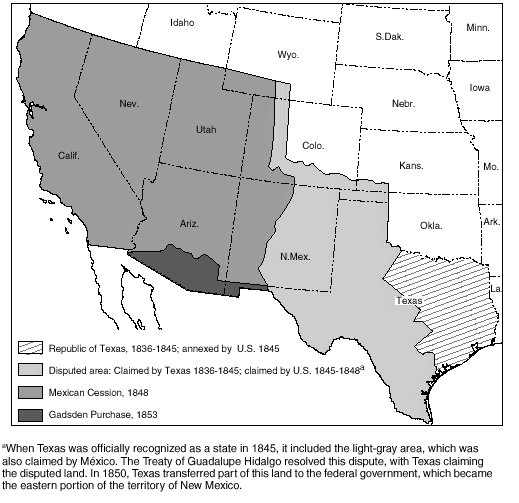
In December 1845, the U.S. Congress voted to annex the Texas Republic and soon sent troops led by General Zachary Taylor to the Rio Grande (regarded by Mexicans as their territory) to protect its border with Mexico. The inevitable clashes between Mexican troops and U.S. forces provided the rationale for a Congressional declaration of war on May 13, 1846.

Hostilities continued for the next two years as General Taylor led his troops through to Monterrey, and General Stephen Kearny and his men went to New Mexico, Chihuahua, and California. But it was General Winfield Scott and his army that delivered the decisive blows as they marched from Veracruz to Puebla and finally captured Mexico City itself in August 1847.

Mexican officials and Nicholas Trist, President Polk's representative, began discussions for a peace treaty that August. On February 2, 1848 the Treaty was signed in Guadalupe Hidalgo, a city north of the capital where the Mexican government had fled as U.S. troops advanced. Its provisions called for Mexico to cede 55% of its territory (present-day Arizona, California, New Mexico, and parts of Colorado, Nevada and Utah) in exchange for fifteen million dollars in compensation for war-related damage to Mexican property. - linkage (emphasis mine)

I say "one of our birthdays" because five years after Mexico lost half of its territory at the receiving end of a military assault, la frontera was moved north yet again to its current form.

The territory desired by Gadsden and his group was then a sort of no man's land, experiencing frequent Indian raids. The United States wanted to make certain "boundary adjustments"; Mexico needed money and wanted a settlement of her Indian claims against the United States; and Gadsden and his friends wanted a route for their railroad. In 1852 Gadsden agreed to pay Santa Anna $10,000,000 for a strip of territory south of the Gila River and lying in what is now southwestern New Mexico and southern Arizona.

Many Americans were not especially proud of the Guadalupe-Hidalgo Treaty and considered the price of the Gadsden Purchase as "conscience money." The Gadsden Purchase has an area of 45,535 square miles and is almost as large as Pennsylvania. This tract of nearly 30,000,000 acres cost Uncle Sam about thirty-three cents an acre.

The deal was so unpopular in Mexico that Santa Anna was unseated as dictator and banished. Gadsden was recalled as Minister to Mexico for mixing in Mexican politics and domestic affairs and did not live to see the Southern Pacific Railroad built through his purchase. When the inhabitants of Arizona asked Congress for a Territorial government in 1854, one of the names suggested for the new Territory was Gadsonia, a Latin adaptation of the surname of James Gadsden. - linkage


These dates have been on my mind lately because I honestly feel like they are important threads of history to consider while indigenous families continue to be raided in their workplaces, splitting up homes forcefully the same way they were 150+ years ago (hat tip to Madman for the CounterPunch link).

I think the "uphold the law" crowd likes to pretend that there is no history when it comes to the cultural and political dynamics that exist between the United States and Latin America (mainly thinking of Mexico here). The reason that places like Texas are part of the U.S. is because illegals were invading the territory in droves during the mad rushes of gold fever and Manifest Destiny. The only differences between them and the current illegals were/are skin color and language.

It should be noted that when the Treaty of Guadalupe Hidalgo was signed, the U.S. Congress decided that it needed to make changes when they got their hands on it. They stripped away guarantees of property rights and ties to the mother languages of the people who suddenly found themselves citizens of a different government overnight.

But, as we all know, life is a stubborn child that will get its way despite the rules. That is why we still have countless homes of citizens and non-citizens that speak only Spanish, or cities such as El Pueblo de Nuestra Señora la Reina de los Angeles del Rio Porciúncula within the United States (L.A. for the uninformed), or United States-born Americans who can say things like "that's as American as salsa de tomatillo!" without flinching.

There are Xicanos in the United States with a bicultural identity because we have a history that is bicultural. It is not rocketscience. And I don't think it is asking too much that we be allowed to live it through our language or synergistic reality, much to the chagrin of the nativist brigades.

Walking the streets of Washington D.C. last weekend by myself was something that I have done before. This time was different, however. I felt disconnected from the meaning of the glow of the lit monuments at night. I'm aware that my history also flows in the direction of the Potomac, but it seems like that is the mundane tributary at the moment. I'm on a quest to unearth the spring that can be found in the dusty river bottom of the Gila instead.

At some point I will find the source. From where all of the water flows. But for now, all I can see is the sangre-tinged currents and wonder what it will take for all of us to stop and figure out a way how to coexist without conquering or killing one another.

Más Historia:
Crossposted at BooMan Tribune

Monday, December 17, 2007

Una Identidad Sin Fronteras: Posadas

Today, December 17th, marks the second day in another example of centuries worth of cultural synergy in action - Las Posadas. It is a cultural tradition that gave birth to many iconic aspects of modern Latin@ culture.

Within a decade of the appearance of La Virgen de Guadalupe in Tenochtitlan, Roman Catholic missionaries were working on supplanting the Aztec celebration of the birth of their sun deity Huitzilopchtli, which occurred during the (European) month of December, with one that was more Christian in nature. St. Ignatius of Loyola, founder of the Jesuit Order, received permission from Rome to institute a nine day period of prayer leading up to Christmas in the "New World". Now commonly known as a novena, each day for this particular novena was to signify the nine months of Mary's pregnancy.

Las Posadas, which means the Inns in English, is the reenactment of Mary and Joseph's experience when they arrived in Belén.

In those days a decree went out from Emperor Augustus that all the world should be registered. This was the first registration and was taken while Quirinius was governor of Syria. All went to their own towns to be registered. Joseph also went from the town of Nazareth in Galilee to Judea, to the city of David called Bethlehem, because he was descended from the house and family of David. He went to be registered with Mary, to whom he was engaged and who was expecting a child. While they were there, the time came for her to deliver her child. And she gave birth to her firstborn son and wrapped him in bands of cloth, and laid him in a manger, because there was no place for them in the inn. - Luke 2:1-8
Each night of Las Posadas, processions of candle-carrying pilgrims make their way in song to pre-determined destinations where they are symbolically and, sometimes truly, turned away. Usually there are figures of Mary and Joseph carried in honor with the procession, as well as a nacimiento (nativity scene) at the house that the people gather. As the nine days progress, verses of the traditional song are added, telling the story of a very different Jesus than is commonly espoused by the rich and elite. Here is the English version, but I've only ever heard it sung in Spanish.
Outside
In the name of Heaven
I beg you for lodging,
for she cannot walk
my beloved wife.

Inside
This is not an inn
so keep going
I cannot open
you may be a rogue.

Outside
Don't be inhuman;
Have mercy on us.
The God of the heavens
will reward you for it.

Inside
You can go on now
and don't bother us,
because if I become annoyed
I'll give you a trashing.

Outside
We are worn out
coming from Nazareth.
I am a carpenter,
Joseph by name.

Inside
I don't care about your name:
Let me sleep,
because I already told you
we shall not open up.

Outside
I'm asking you for lodging
dear man of the house
Just for one night
for the Queen of Heaven.

Inside
Well, if it's a queen
who solicits it,
why is it at night
that she travels so alone?

Outside
My wife is Mary
She's the Queen of Heaven
and she's going to be the mother
of the Divine Word.

Inside
Are you Joseph?
Your wife is Mary?
Enter, pilgrims;
I did not recognize you.

Outside
May God pay, gentle folks,
your charity,
and thus heaven heap
happiness upon you.

Inside
Blessed is the house
that shelters this day
the pure Virgin,
the beautiful Mary.

Final Celebration
Enter, holy pilgrims,
receive this corner,
for though this dwelling is poor,
I offer it with all my heart.

Oh, graced pilgrim,
oh, most beautiful Mary.
I offer you my soul
so you may have lodging.

Humble pilgrims,
Jesus, Mary and Joseph,
I give my soul for them
And my heart as well.

Let us sing with joy,
all bearing in mind
that Jesus, Joseph and Mary
honor us by having come.

linkage
As I mentioned at the beginning of the post, the celebrations for Posadas are full of iconic symbols of la cultura mexicana. Piñatas originated during the first fiestas in the form of estrellas to signify the Star of David that alerted the wise men and shepherds to the birth of Christ. Traditional foods such as tamales, buñuelos (cross between doughnuts and sopapillas), and champurrado (chocolate atole) are also part of the usual forms of celebration.

Across the United States, Posadas are being celebrated by communities and neighborhoods, with some gleaning the obvious political realities faced by their families.
NOGALES, Ariz. — With border agents, Customs officers and police looking on, a group of Catholics here turned the international border into Bethlehem and sang Christmas songs into a green metal grille separating the United States and Mexico.

The Saturday afternoon "Posada on the Border" was a dramatization of Mary and Joseph's search for lodging in Bethlehem the night of Jesus' birth. Re-enactments occurred simultaneously on both sides of the international line, with those on the U.S. side incorporating border politics into their performance.

In a shadow cast by the cement-and-steel border wall, 11-year-old Gerardo Perez, playing Joseph, and 11-year-old Luz Mariela Robles, as Mary, walked the sidewalk along the international border seeking shelter, or posada.

Led by Miriam Lewis, also 11, who played the angel, they knocked on doors of three "inns" named Arizona, California, and New Mexico/Texas.

Each time, they were rejected and the group prayed for migrants who have died in that state while trying to cross into the United States from Mexico on foot.

Catholic officials say the dramatization was intended as a message that we need to be more welcoming of migrants seeking jobs and homes in other countries.

linkage
This is one of my favorite celebrations of the year because it turns the commercial-infected holiday season into one infused with the spirit of charity and family. Traditionally, gifts were not even opened on Christmas day, but rather on Dia de los Reyes Magos in January, but as with any melding of cultures, I'll be handing out presents to mis hijados and getting some from family on the 25th. There is one aunt that waits, though, and I smile to think of her.

She lives in the house of my great-grandmother who passed when I was a small child. Although I was a little guy at the time, I can still visualize the corner of her living where the nacimiento was layed out with care - the same nacimiento that was given to me when she passed on - the same that I proudly put out every year during these final days of the year.

It is a reminder of where I've been and, more importantly, a re-realization of the charity that is expected of me as a follower of a boy who was born in a stable among animals because his family was turned away.

Mas información:

Posadas - Wikipedia
Navidad en Mexico - Mexconnect.com
Posadas on Olvera Street
Holiday Traditions - Mexico (with Champurrado and Arroz con Leche recipes!)